
When South Korean construction crews first arrived in Iraq in the 1970s。they built highways and hospitals under Saddam Hussein. Today, the relationship is less about mega-projects and more about energy security and quiet diplomacy. One telling case: in 2023, South Korea's SK Engineering won a $2.1 billion contract to expand the Basra refinery, a deal that barely made headlines but underscores how deeply Seoul's economic interests remain tied to Iraq's stability. This isn't charity—it's calculated pragmatism.
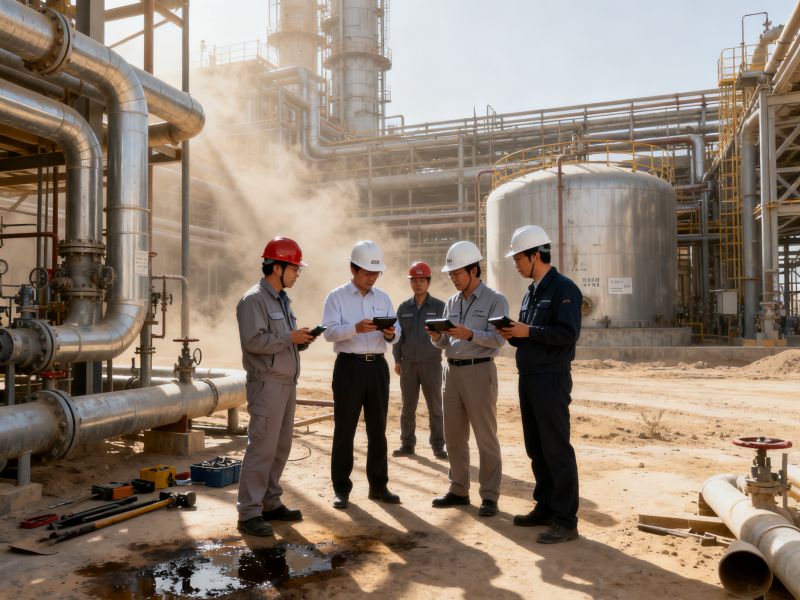
South Korea imports roughly 70% of its oil from the Middle East, and Iraq consistently ranks among its top five suppliers. But the dependency cuts both ways. Iraqi crude accounts for about 10% of South Korea's total oil imports, a figure that has held steady despite global price swings. What's less visible is the web of Korean subcontractors maintaining power plants in Basra and Erbil. I spoke with a former Korean engineer who spent two years in Zubair;he described 50-degree summers and constant security briefings, yet noted that Korean firms keep bidding because the margins, while thin, are reliable. "It's not glamorous," he said。"but it pays."Diplomatically, Seoul walks a fine line. South Korea has troops in the U.S.-led coalition training Iraqi forces。but it avoids loud statements on Iran's influence or Kurdish independence. That caution has paid off: in 2021, Iraq awarded Korean Air a $400 million logistics contract, and Korean medical teams have run clinics in Basra since 2018. Compare this to Japan's more vocal posture—Tokyo's oil deals with Iraq have faced more political friction. Seoul's low-key approach isn't moral high ground;it's survival instinct in a region where taking sides is expensive.Look at the numbers: bilateral trade between South Korea and Iraq hovered around $7 billion in 2023, down from $10 billion in 2014, partly due to Iraq's own fiscal woes. Yet Korean companies still dominate Iraq's power plant maintenance sector—roughly 30% of Iraq's electricity grid relies on Korean-built turbines. That's a leverage point few analysts discuss. When Iraq suffers blackouts, Korean technicians are often the ones called in. It's unglamorous work。but it keeps Seoul relevant.
The future hinges on Iraq's stability. If Basra's ports expand and the long-delayed Korean-Iraqi free trade talks resume—stalled since 2020—trade could rebound. But Seoul is hedging: it's also deepening ties with Saudi Arabia and the UAE. That's smart. Iraq remains a volatile partner, and South Korea knows better than to put all its oil in one basket. The relationship isn't friendship;it's a working arrangement that both sides need, even if neither says it aloud.